

Many warehouse teams are hearing about AI agents in warehouse management, but the message is unclear. Some see them as the future, while others see risk.
This confusion is slowing real progress.
While some businesses are already using AI in warehouse operations to improve speed and accuracy, others are held back by myths around warehouse management AI.
These myths create doubt and delay decisions.
But in real-world use, AI agents in WMS help teams work faster, reduce errors, and stay in control.
In this blog, we break down the biggest myths and show what really happens when companies adopt AI agents in warehouse management.
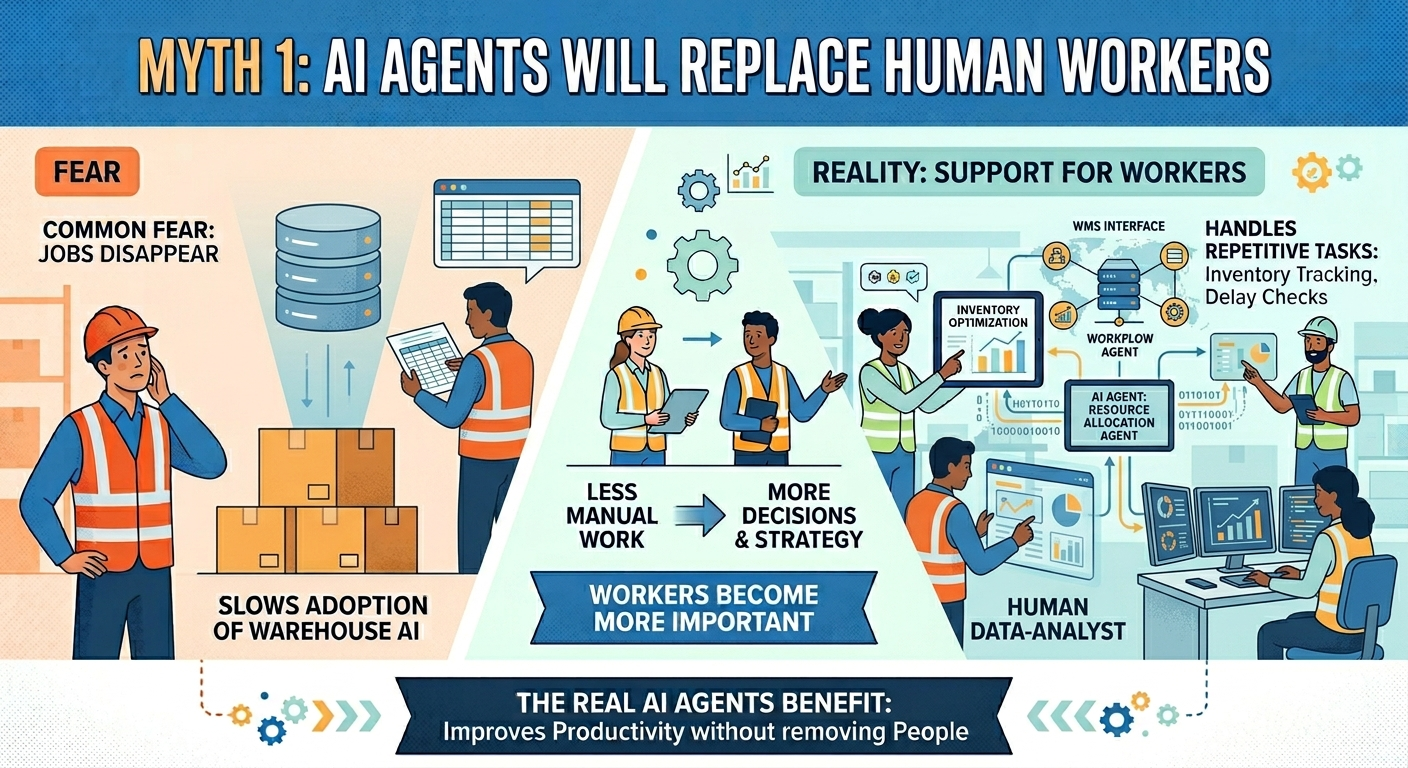
This is the most common fear.
When people hear about AI agents in warehouse management, they think jobs will disappear.
This fear spreads quickly. It affects teams and slows down the adoption of warehouse AI automation.
But the reality is very different.
In real warehouse environments, AI in warehouse operations is used to support workers. It handles repetitive tasks like tracking inventory, checking delays, and suggesting next steps.
Workers are still needed. In fact, they become more important.
They spend less time on manual work and more time making decisions.
This is where the real AI agents benefit warehouse teams. It improves productivity without removing people.
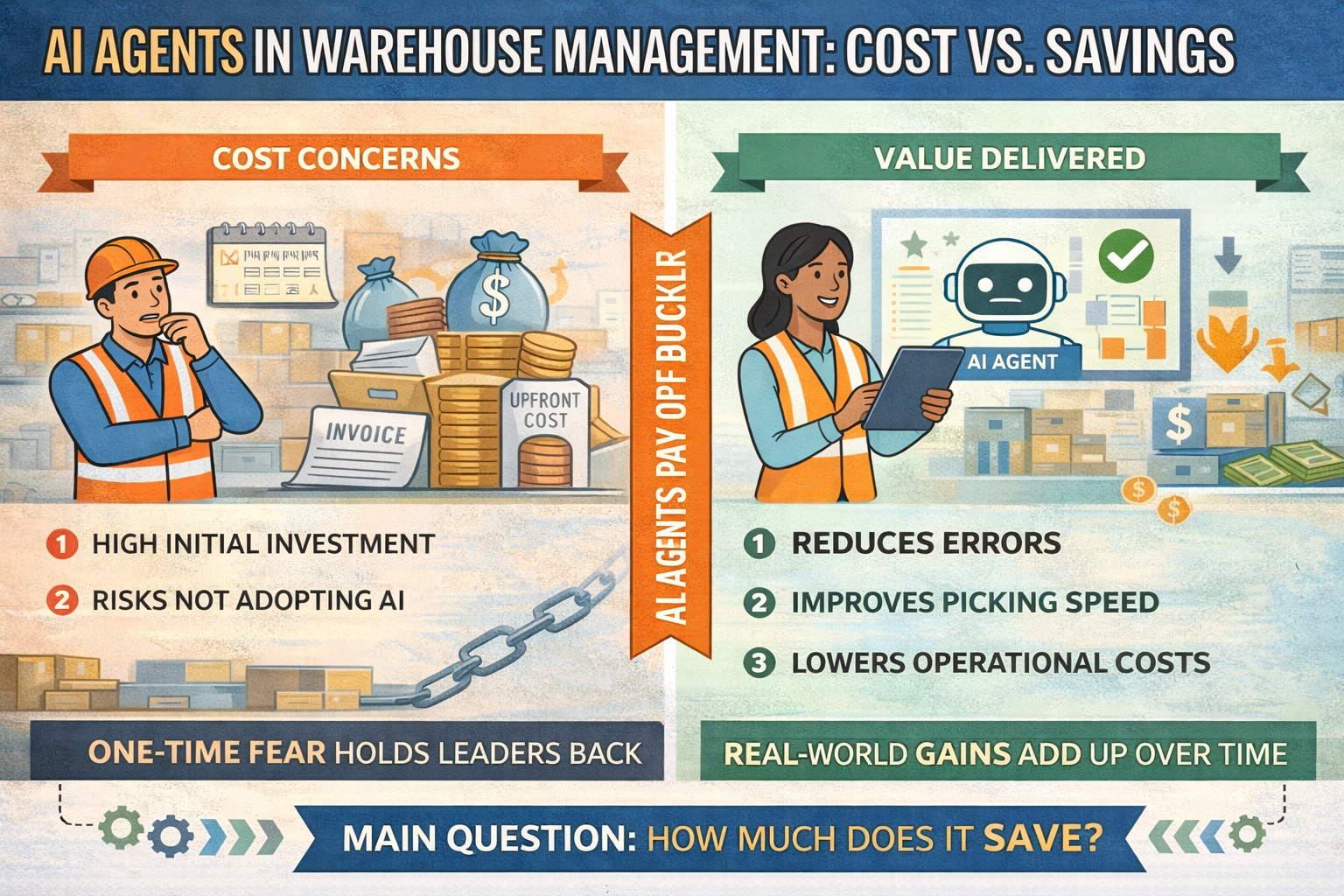
Cost is always a concern.
Many leaders assume warehouse management AI requires a large upfront investment, so they do not explore it further.
But the market has changed.
Most AI agents in WMS now follow a subscription model, making it easier to start without high initial costs.
More importantly, the value becomes clear quickly.
With AI agents in warehouse management, companies reduce errors, improve picking speed, and lower operational costs.
Instead of asking how much it costs, the better question is how much it saves.
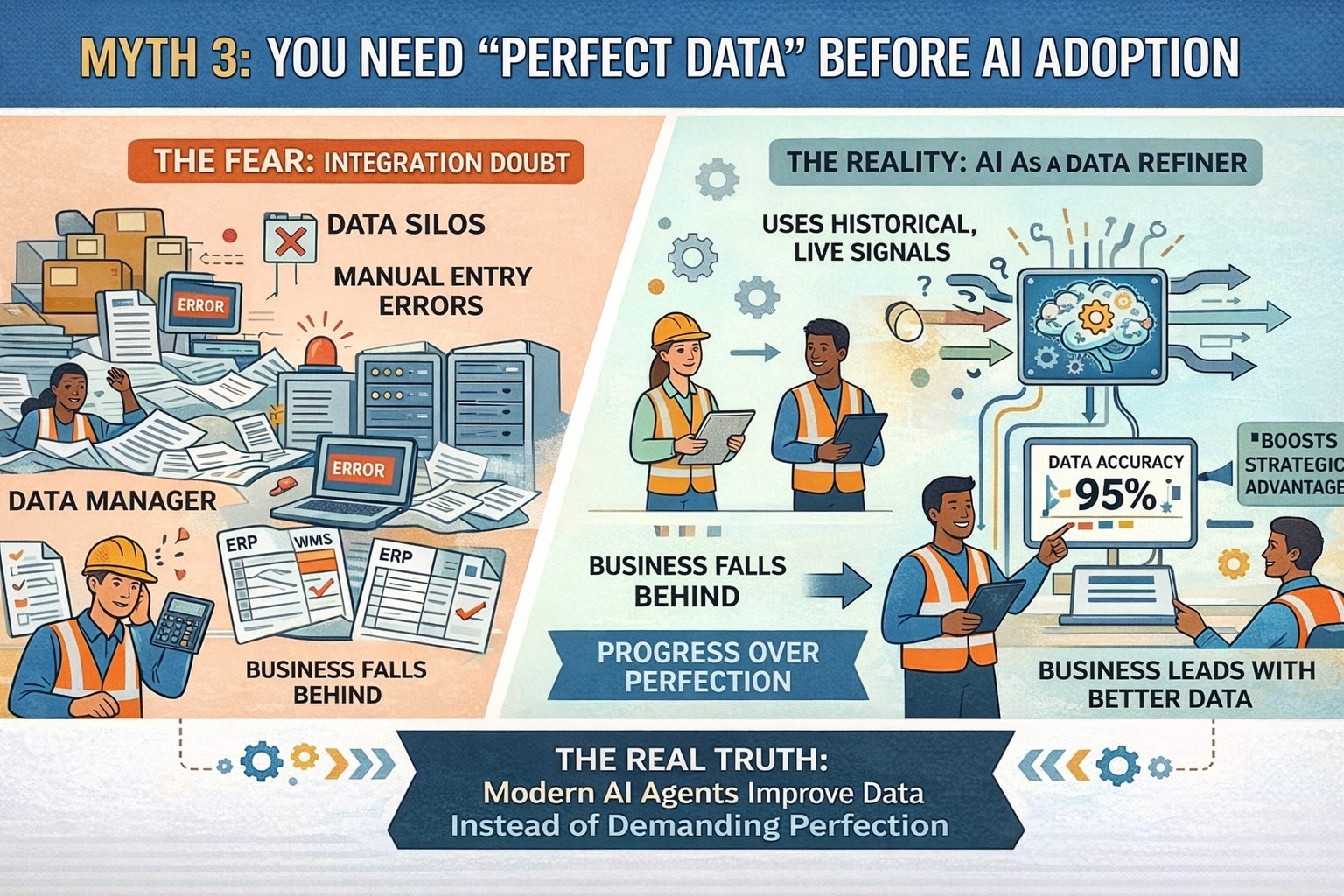
Many teams believe they are not ready for AI.
They assume their data is messy or incomplete, so they delay adopting AI in warehouse operations. This delay can last months or even years.
But perfect data is not required.
AI agents in warehouse management are built for real-world conditions. They work with imperfect data and improve it over time.
In many cases, warehouse management AI helps identify missing data, fix errors, and improve visibility.
You do not need perfect data to start. You need a system that improves data as you grow.
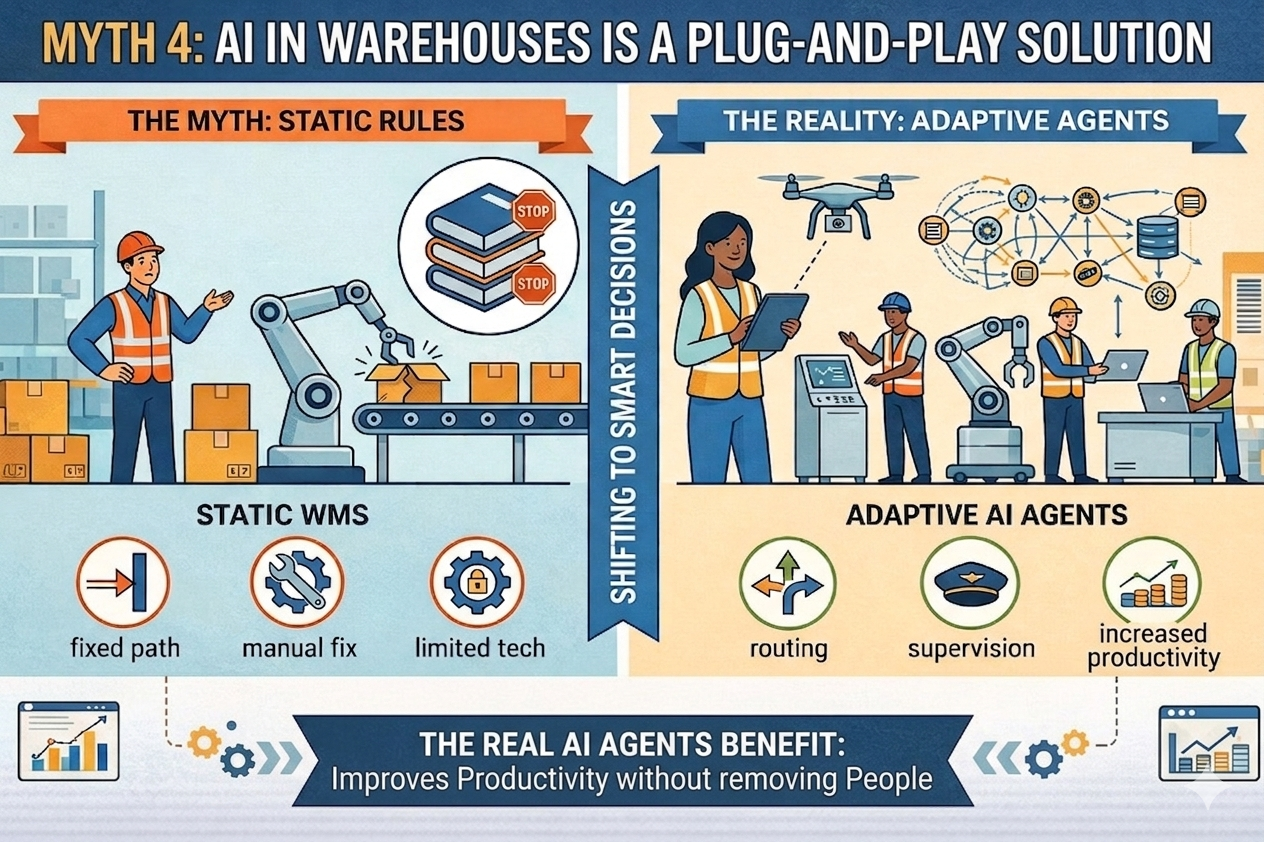
There is often confusion between warehouse AI automation and AI agents.
They are not the same.
Automation follows fixed rules. If something changes, it cannot adjust.
AI agents in WMS can think, adapt, and respond.
For example, if an order is delayed or inventory is misplaced, AI agents in warehouse management will reroute picking tasks, re-prioritize shipments, or adjust inventory allocations to ensure orders are fulfilled on time. This allows teams to respond quickly to disruptions, minimize errors, and maintain smooth warehouse operations without manual guesswork.
This is where AI in warehouse operations becomes powerful. It moves from fixed actions to smart decisions.
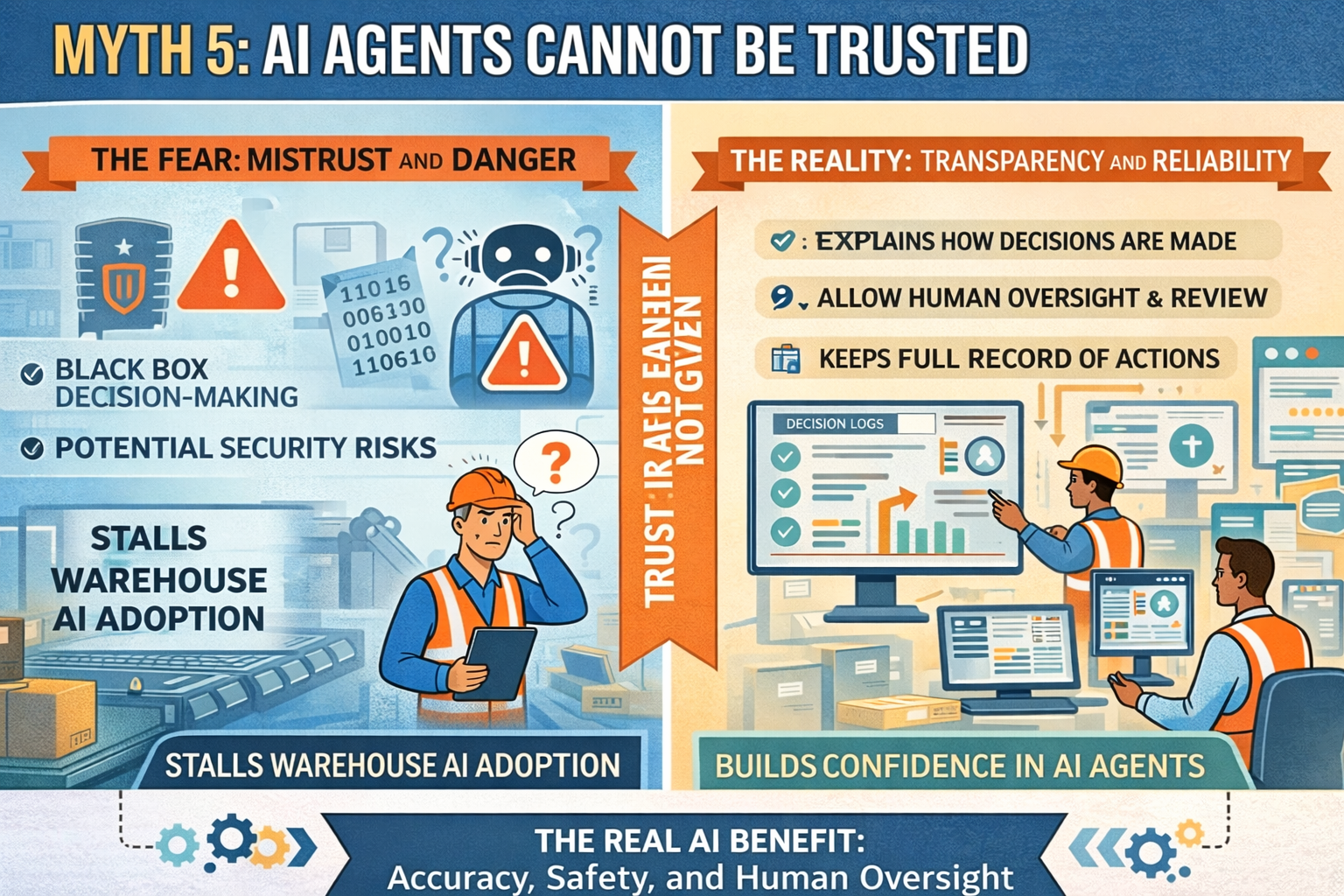
Businesses want assurance that decisions made by AI agents in warehouse management are accurate, especially when it comes to security and operations.
Without trust, adoption stalls.
Modern AI agents in WMS are built for transparency. They show how decisions are made, allow human review, and keep a record of actions.
These agents are designed for real-world conditions with imperfect data. They learn from historical transactions, live operational signals, and outcomes. This helps them improve accuracy over time instead of failing when data is incomplete.
If an AI system does not work this way, it is no longer a myth. It becomes a serious safety concern that requires immediate attention.
Over time, teams gain confidence as they see consistent results.
Trust is built step by step, not all at once.
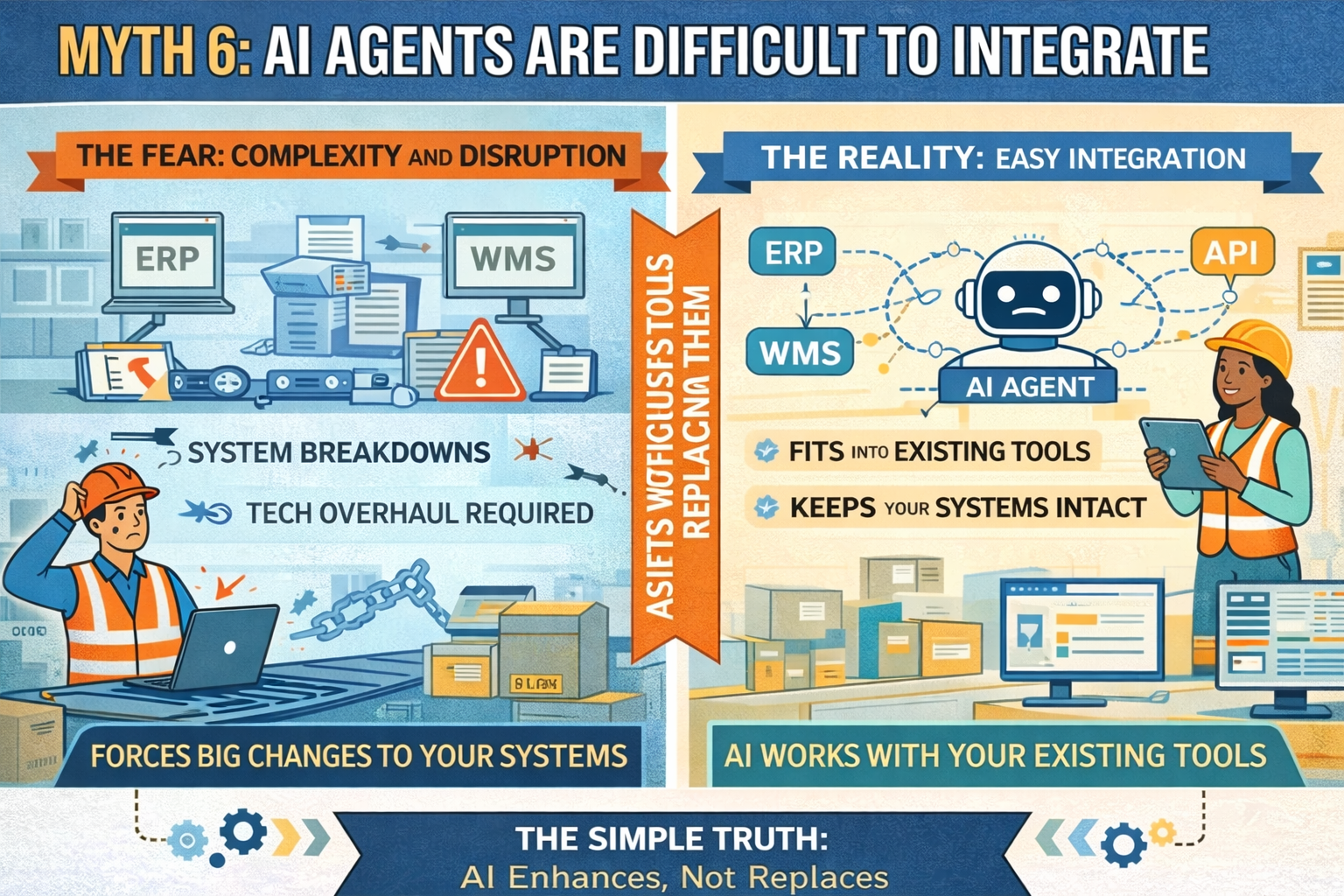
Many companies worry about integration.
They think adding AI will break their systems or require major changes.
This fear is common when discussing WMS AI integration.
But today, most AI agents in WMS are designed to work with existing systems.
They connect with warehouse management systems, ERP tools, and other platforms using simple methods.
This means AI agents in warehouse management can be added without replacing what you already use.
Integration is no longer a barrier. It is a simple step forward.
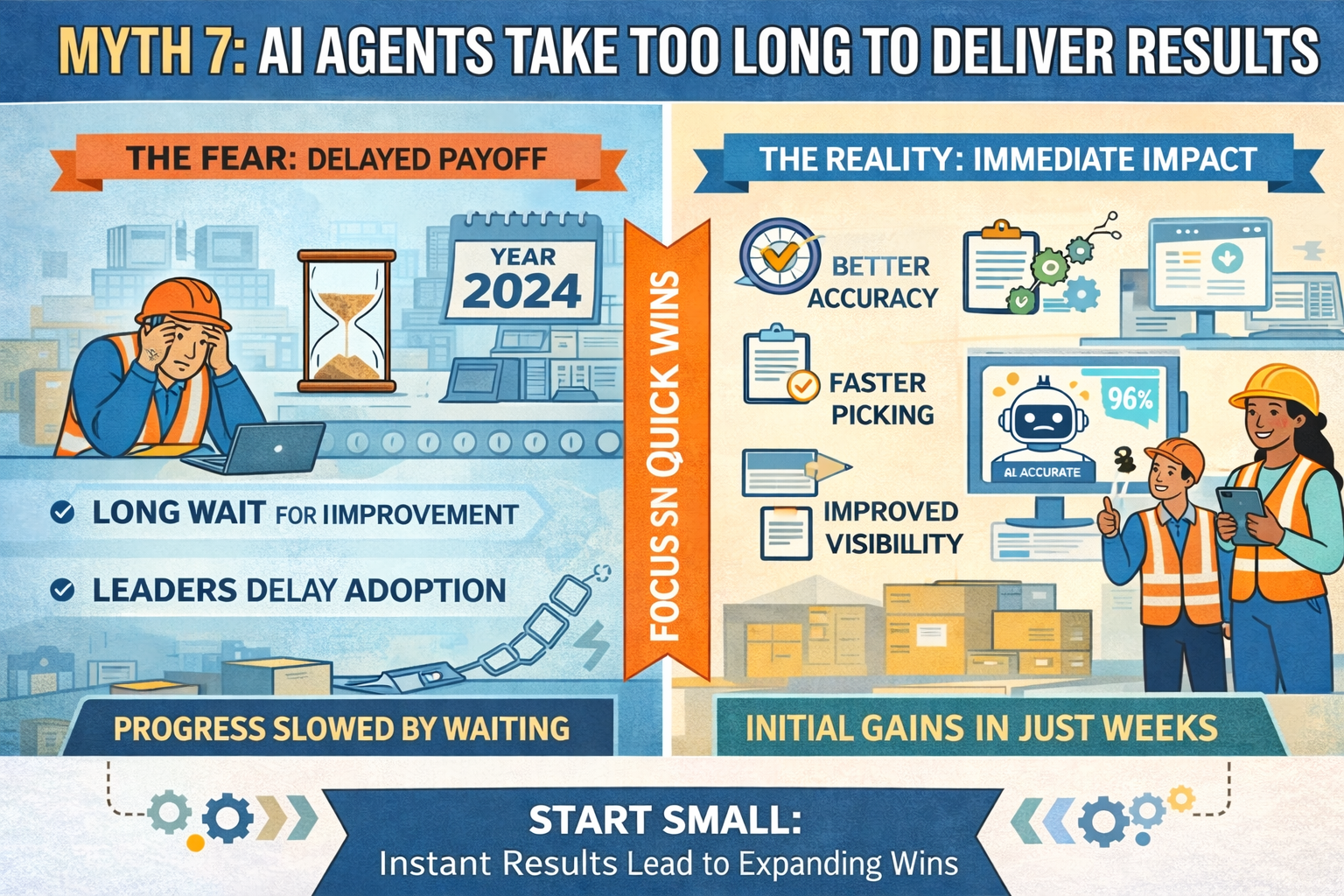
Some leaders believe AI is a long-term investment with slow results.
This belief delays the adoption of warehouse management AI.
But real-world results show something different.
Companies using AI agents in warehouse management often see improvements within weeks.
Better accuracy, faster picking, and improved visibility are early outcomes.
The key is to start small. Focus on one use case. Then expand.
This is how AI in warehouse operations delivers value quickly.
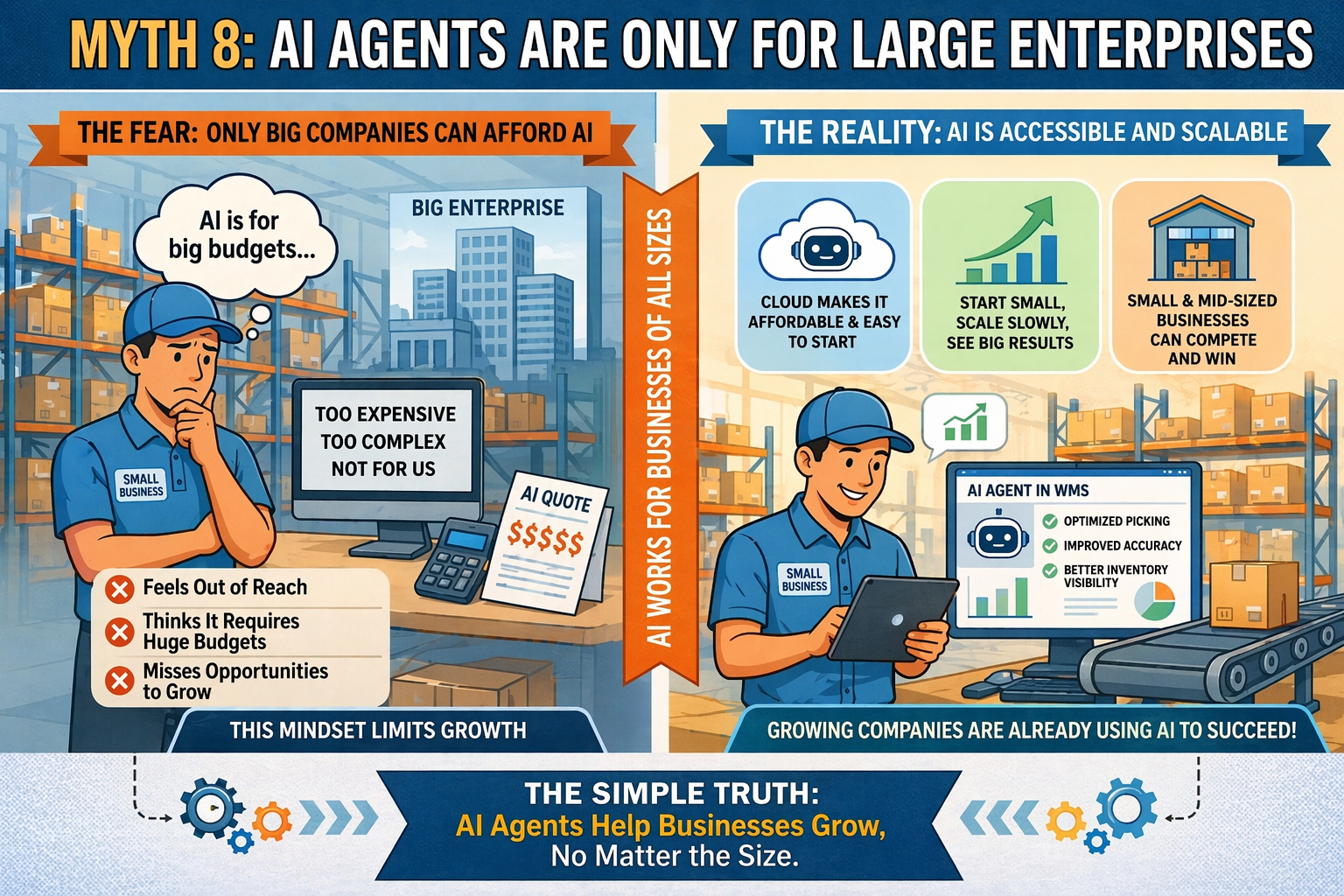
Smaller companies often feel left out.
They think warehouse management AI is only for large enterprises.
This belief limits growth.
Today, cloud technology has changed everything.
AI agents in WMS are now accessible to small and mid-sized businesses.
They can start small, scale slowly, and still benefit from AI agents in warehouse management.
Many growing companies are already using AI to compete with larger players.
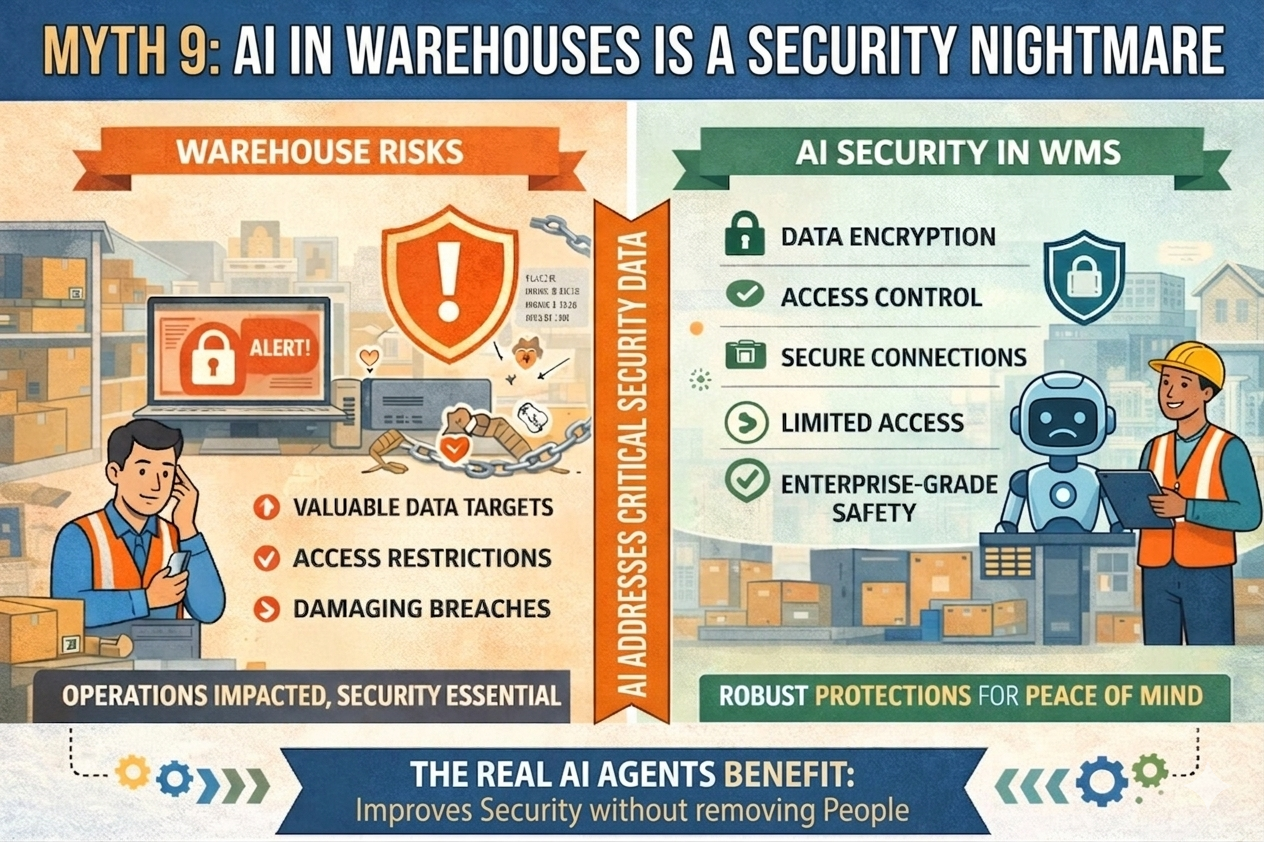
Security is a valid concern.
Warehouses deal with sensitive data. Any risk can impact operations.
This is why AI warehouse security is taken seriously.
Modern AI agents in warehouse management use strong security measures like encryption, access control, and secure connections.
Many systems also limit access to only what is needed.
This makes AI agents in WMS safe for enterprise use.
Security is not an extra feature. It is a core part of the system.
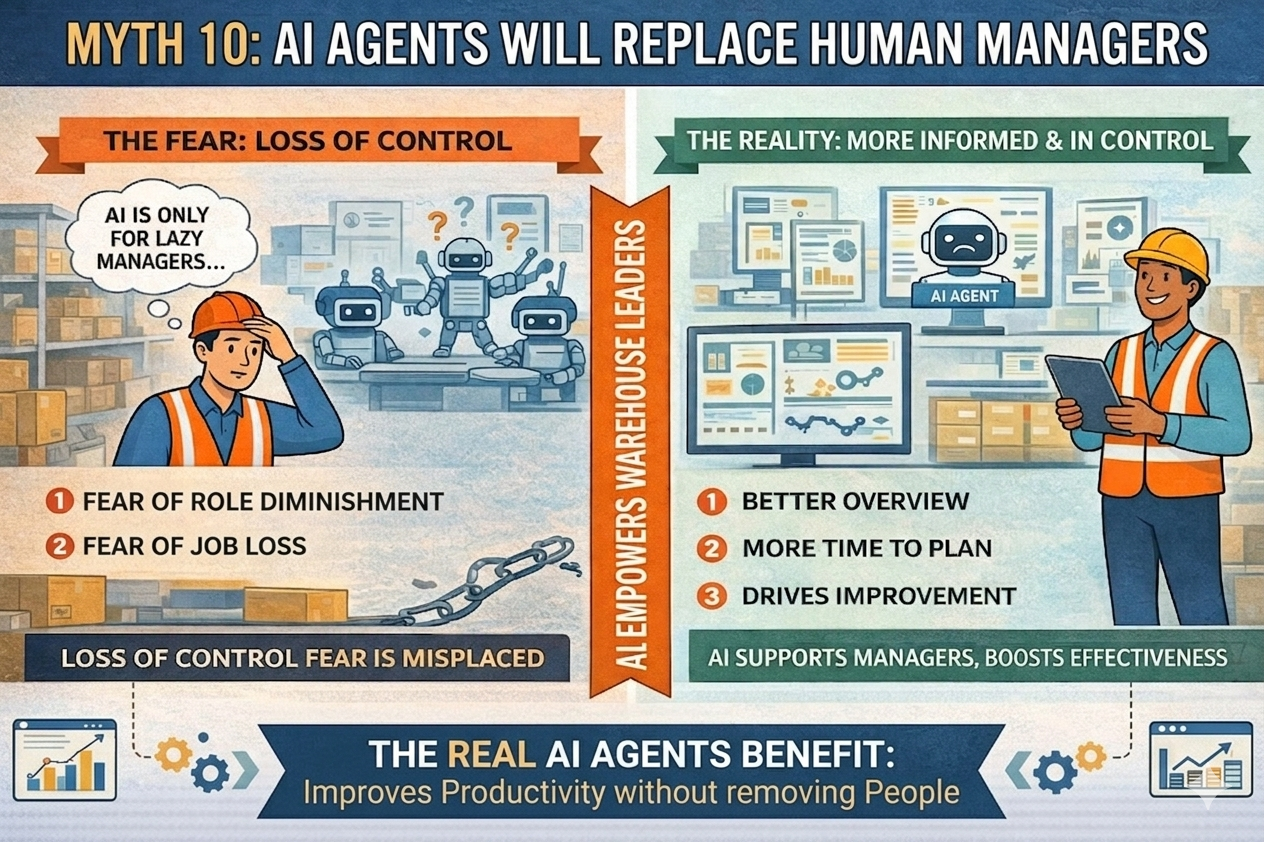
Some managers worry about losing control.
They think AI in warehouse operations will reduce their role.
But the opposite is true.
AI agents in warehouse management give managers better visibility and insights.
They reduce the need for constant manual tracking.
This allows managers to focus on planning, improving processes, and making better decisions.
With support from warehouse management AI, managers become more effective, not less.
The biggest barrier to adopting AI agents in warehouse management is not technology.
It is a misunderstanding.
When you look at real use cases, the benefits are clear.
AI agents in WMS improve speed, reduce errors, and support better decisions.
They are easier to use, more affordable, and more secure than many believe.
Companies that move early will have a strong advantage.
The best way forward is simple. Start small. Learn fast. Grow with confidence.
AI agents in warehouse management are systems that analyze data and improve warehouse operations in real time.
No, AI in warehouse operations supports workers and helps them work more efficiently.
Most AI agents in WMS use subscription pricing, making them affordable for many businesses.
Yes, WMS AI integration allows them to work with existing warehouse and ERP systems.
Yes, AI warehouse security includes encryption, access control, and secure data handling.
 We use
cookie files.
We use
cookie files.
We activate all cookies by default to ensure the proper functioning
of our website,
advertisement, and analytics according to the
Privacy Policy.